Rust, How a Solo Player Survives Wipe Day and Raids Against Zergs
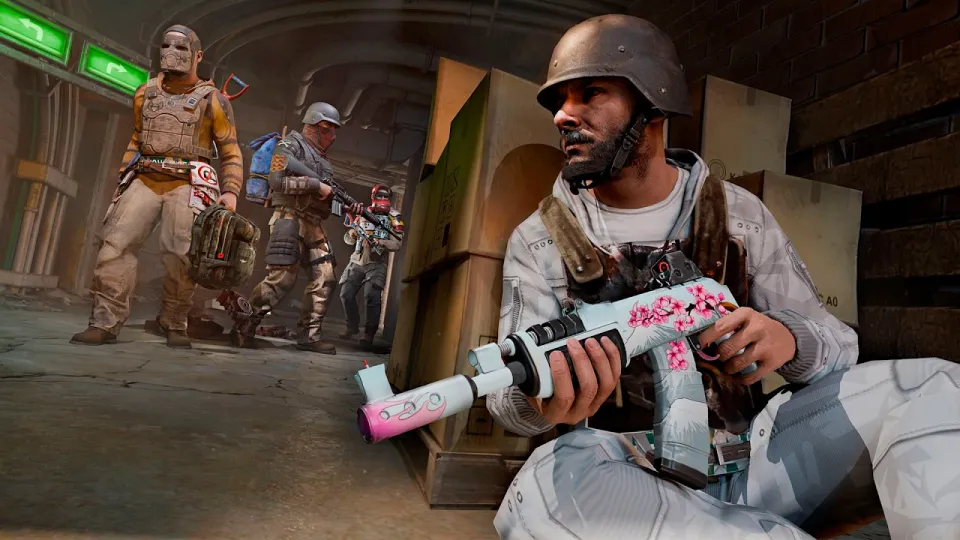
Video: THE SOLO MENACE – Rust
Need articles like this for your video? They help promote it on YouTube and Google — order them in the Telegram bot @sat_sit_bot. It writes articles around your video, embeds the video and publishes them on popular niche websites (no ads). Free trial — 50 articles.
Key takeaways
- Solo Rust is a numbers game: one player must cover farming, building, defence and scouting alone, while clans split those jobs across several members.
- Wipe day is the single biggest advantage a solo has, because large groups are still split across the map and competing for the same monuments.
- A compact multi-layered base with a small footprint is harder for a zerg to justify raiding than a large, obviously loot-rich compound.
- Every raid a solo survives is a net gain: the attackers spend explosives and sulphur that take hours to farm.
- SPiiCY's solo run in THE SOLO MENACE shows a revenge raid as the standard solo answer to being offline-raided.
Solo Rust is the practice of playing the survival game without a team: one player handles farming, base building, crafting, scouting and defence alone against groups of five, ten or more. It is viable, but only if you treat it as a discipline of efficiency rather than a fair fight — compact bases, short farming routes, cheap gear and constant map awareness. SPiiCY's solo run in THE SOLO MENACE shows the pattern, and viewers who want the same start can grab the RustEasy bonus and server tools before their next wipe.
Why solo Rust is a different game from clan play
A solo player in Rust is outnumbered in every category except time management. A clan of eight can send two members to farm stone, two to run monuments, one to build and still have three roaming with guns; a solo has to do each of those jobs sequentially, so any minute spent inefficiently is a minute the group is ahead.
The practical consequences shape everything:
- Gear is disposable. Losing a full kit hurts a solo far more than a clan member, so cheap loadouts (crossbow, revolver, primitive armour) are the default until a base is secure.
- Footprint beats size. A small, layered base with a tight loot room is less attractive to raid than a sprawling compound that signals wealth.
- Information is defence. Knowing who lives in the neighbouring valleys — and whether they are a duo or a zerg — prevents most wipes before they happen.
- Farming routes must be short. Stone, wood and scrap runs should loop back to the base within a few minutes, not stretch across half the map.
Wipe day: the solo player's best window
Wipe day is the one moment when a solo is on roughly equal footing with a large group, because nobody has explosives, vehicles or established territory yet. Clans are spread across the map racing for the same monuments, and their members often spawn far apart.
The opening hours should follow a fixed order: secure a sleeping bag and small starter near a low-traffic monument, get a furnace and workbench down, then push scrap for blueprints before the roads fill with geared players. Primitive PvP is at its most forgiving early, so contesting a monument in the first hour is often more profitable than farming quietly in the woods. By the time groups consolidate, a solo should already have a stone core and a locked tool cupboard.
Base design for one player
The best solo base in Rust is the one that looks like it holds nothing worth the explosives. That means a modest exterior, a honeycombed core and a loot room placed where raiders have to commit the most resources to reach it.
Key principles that hold across wipe cycles:
- Honeycomb before height. Extra layers around the core cost stone and buy time; extra floors cost more and expose more loot.
- Multiple small rooms. Splitting loot across several compartments means a single breach rarely ends the wipe.
- Shooting floor over storage. A window or peek floor gives a solo a defensive advantage that raw size never does.
- Decoy cupboards and doors. Cheap doors on the outside slow raiders and waste their explosives on empty space.
- Trap elements. Shotgun traps, flame turrets or a bait room turn a raid into a fight the defender can win.
SPiiCY publishes full base design tutorials and build guides through the Patreon membership, which is where the layered layouts shown in solo videos are broken down step by step.
Fighting zergs: raids, revenge and defence
A solo cannot out-fight a zerg in open combat, but a solo can out-plan one. The realistic goals are to punish overextension, take fights near your own base where you respawn faster, and make raiding you expensive enough that a group picks an easier target.
When a solo base is raided offline, the standard answer is a revenge raid: scout the attackers' base, identify the cheapest path to their loot room, and hit it while they are online and distracted elsewhere. Sulphur is the bottleneck — a solo needs a steady scrap and sulphur income to craft explosives, which is why monument runs and recycling matter as much as PvP.
In defence, the defender's advantages are respawn proximity, knowledge of the layout and prepared traps. Attackers must bring enough explosives to finish the job in one session; if they run out, the solo wins by default.
Tools, performance and settings
Frame rate decides fights in Rust more than most players admit, especially in close-range PvP and during raid defence when several players push at once. Lower, stable frame times make recoil control and target tracking noticeably easier.
SPiiCY promotes Hypertune as a performance tool for exactly this reason — a viewer reported roughly double the FPS after using it, which is the kind of headroom that matters on high-population servers. Beyond FPS, solo players should prioritise a sensitivity they can repeat, a graphics preset that keeps distant movement visible, and audio settings that make footsteps readable. Recoil patterns changed with Rust's recoil update, so time in a training server before a wipe is worth more than any single weapon blueprint.
Questions solo players ask most
The recurring doubts from viewers of solo Rust content tend to be about motivation and matchmaking rather than mechanics. Players want to know how a solo keeps going after a string of losses, whether high-population servers are playable alone, and how much of the success in these videos comes from server selection versus skill.
The honest answer is that persistence and server choice both matter. High-population vanilla servers are brutal for solos because roaming groups are everywhere, but they also offer more targets, more monuments and more loot in circulation. Many solos prefer slightly lower-population or modded servers where progression is faster and the gap between one player and a group is narrower. Losing gear is inevitable; the players who last are the ones who rebuild immediately instead of quitting for the night.
All links from the video
- RustEasy bonus and tools
- SPiiCY base design tutorials on Patreon
- Hypertune FPS tool
- Patreon join page
- SPiiCY Discord
Conclusion
Solo Rust rewards preparation over raw aim: wipe-day timing, a small layered base, cheap kits and a willingness to retaliate are what keep a one-player wipe alive. THE SOLO MENACE, put together by SPiiCY, is a useful case study in that loop — farming, building, losing gear and coming back with a revenge raid instead of logging off. Treat every survived raid as a win, because the attackers paid in sulphur and time for nothing. If you want to start the next wipe with an edge, claim the RustEasy bonus through SPiiCY's link and use the base guides before you place your first foundation.
Questions & answers
Can you actually play Rust solo against clans?
Yes, but not by fighting clans head-on. Solo play works through efficient wipe-day progression, a compact multi-layer base, cheap loadouts and short farming loops. The goal is to make raiding you expensive and to punish groups that overextend.
What is the best solo base design in Rust?
A small footprint with honeycombed walls around a split loot core, plus a shooting floor and a few traps. Size signals wealth, so a modest exterior that hides several small compartments is safer than a large compound. Step-by-step layouts are available through SPiiCY's Patreon base tutorials.
How does a solo player deal with being offline-raided?
Scout the attackers' base, find the cheapest route to their loot room and hit them while they are online and busy elsewhere. Revenge raids work because the raiders rarely expect a solo to have the sulphur and explosives ready.
Do you need high FPS to compete in Rust PvP?
Stable frame times help with recoil control and tracking, especially in close-range fights and raid defence. Tools like Hypertune are used to raise FPS on busy servers, but sensitivity consistency and practice on a training server matter just as much.
Source: THE SOLO MENACE – Rust · Markdown version